The End of the Cloud-Tethered Relay
For more than a decade, consumer smart home devices operated primarily on a flawed architectural assumption: every peripheral command, state query, and timer routine was forced to make a round-trip to an overseas cloud server. When a user pressed a Zigbee wall switch to toggle a ceiling luminaire, the event was frequently dispatched over Wi-Fi to a vendor broker, authenticated against a remote database, and returned to a hub inside the same dwelling. This design introduced latency penalties ranging from 300 milliseconds to several seconds, created points of catastrophic failure during broadband outages, and left consumers vulnerable when hardware manufacturers retired cloud services.
The contemporary standard prioritises deterministic, zero-latency local execution. Devices now communicate across unified local radio fabrics where border routers, smart switches, environmental sensors, and motorized deadbolts exchange encrypted payloads without touching the public internet. Platforms such as Home Assistant, Apple Home, and newer implementations of Google Home and Amazon Alexa increasingly execute rule engines directly on local gateways.
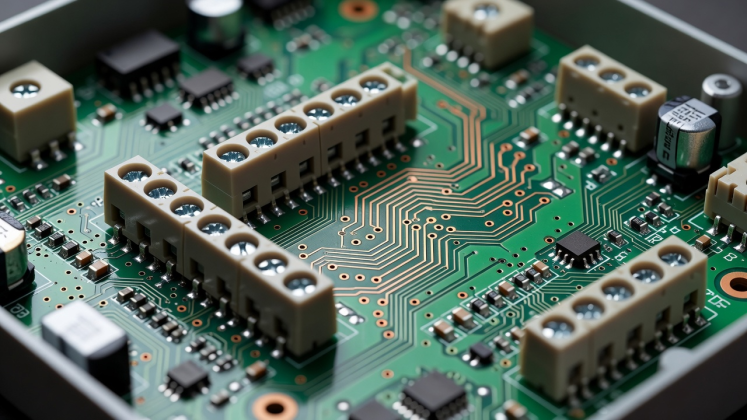
Matter over Thread vs Legacy Wireless Stacks
To understand modern interoperability, one must separate the physical radio layer from the application communication layer. For years, Zigbee and Z-Wave served as reliable low-power mesh standards, yet each suffered from walled-garden implementations and non-standardised application clusters. Matter resolves this divergence by establishing an IP-based application standard that runs seamlessly over Ethernet, Wi-Fi, and Thread (IEEE 802.15.4).
Thread operates as a self-healing, low-power IPv6 mesh network. Unlike traditional Wi-Fi, which places substantial power and routing burdens on the residential wireless access point, Thread devices form an ad-hoc mesh. Mains-powered devices—such as smart plugs, in-wall light switches, and motorized shade controllers—act as Thread Routers, extending network coverage across thick masonry walls typical of UK construction. Battery-powered devices, including contact sensors and ambient temperature monitors, act as Sleepy End Devices, waking only for milliseconds to broadcast state changes.
Crucially, Thread Border Routers (embedded in hardware like the Apple TV 4K, HomePod mini, Google Nest Hub, or specialised Home Assistant SkyConnect dongles) translate Thread IPv6 traffic directly onto the local Wi-Fi and Ethernet local area network. This architecture allows a smartphone on Wi-Fi to communicate directly with a Thread light bulb through low-overhead UDP packets without passing through a proprietary cloud translator.
Multi-Admin Topologies and Ecosystem Coexistence
Prior to the maturation of Matter, households were forced into ecosystem segregation. Selecting Philips Hue, IKEA Home Smart, or Eve accessories required strict adherence to either Apple HomeKit, Google Assistant, or Amazon Alexa platforms. If household members used heterogeneous mobile operating systems, unified control was practically impossible.
Under Matter's Multi-Admin specification, a single certified device can be simultaneously bound to multiple local controllers. A Matter-over-Thread door lock can be commissioned into an Apple Home fabric for iOS-based proximity unlocking while concurrently bridged into a local Home Assistant instance for complex scripting and long-term Prometheus telemetry recording. Each fabric maintains its own independent cryptographic credentials, ensuring that if one controller is reset or updated, the underlying physical hardware remains operational across the others.
Practical Trade-offs: Radio Contention and Commissioning Complexities
Despite significant improvements, modern smart home deployments encounter distinct real-world challenges. Thread, Zigbee, and legacy 2.4 GHz Wi-Fi share identical radio frequency bands between 2400 and 2483.5 MHz. In dense urban flats in London or Manchester, channel overlap between Wi-Fi channels 1, 6, and 11 and Thread channels 15, 20, and 25 can generate packet drops and delayed trigger latencies. Careful frequency mapping is required during initial setup to avoid co-channel saturation.
Furthermore, while basic device clusters—on/off switches, dimmers, temperature sensors, and locks—are uniformly supported across all certified platforms, complex peripheral features such as adaptive lighting curves, granular energy consumption graphing, and multisensor radar presence tuning frequently remain locked behind vendor-specific mobile applications. Discerning adopters must therefore balance the clean uniformity of cross-platform Matter clusters against the deeper parameter customisation provided by native protocols.