The Edge Silicon Revolution: NPUs and Low-Power Tensor Math
For years, artificial intelligence in the domestic sphere was simply a marketing euphemism for cloud API queries. Smart speakers recorded ambient audio buffers, streamed digitized waveforms to cloud data centres, processed Automatic Speech Recognition (ASR) pipelines remotely, and returned audio synthesis streams back down the pipe.
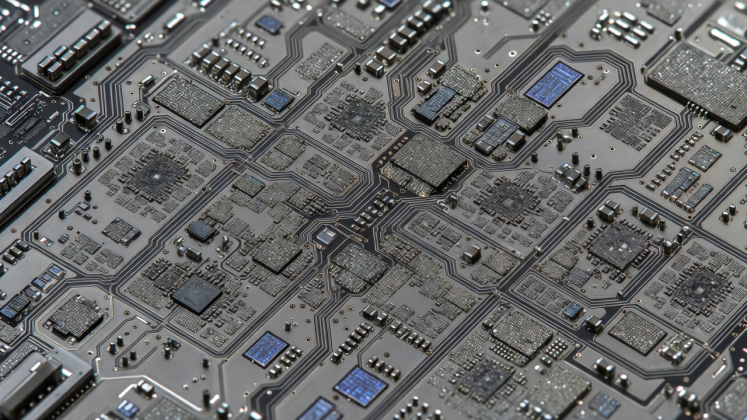
The fundamental inefficiency of this architecture—combined with mounting consumer pushback regarding acoustic wiretapping inside private dwellings—has forced a rapid silicon re-engineering. Modern System-on-Chips (SoCs) from manufacturers including Qualcomm, Apple, MediaTek, and NXP integrate dedicated silicon blocks explicitly designed for matrix multiplication: Neural Processing Units (NPUs). Unlike general-purpose CPUs or graphics-heavy GPUs, NPUs execute integer quantized math (INT8, INT4) at extreme energy efficiencies, drawing mere milliwatts of power while completing trillions of operations per second (TOPS).
On-Device Speech Recognition: Offline Natural Language Understanding
The immediate beneficiary of consumer edge silicon is voice interaction. Legacy voice interfaces like Amazon Alexa and earlier Google Assistant iterations struggled severely whenever domestic internet links suffered jitter or packet dropouts.
Contemporary implementations deploy compact, quantized speech recognition architectures directly into local flash memory. Compact models based on Whisper or transformer variants are executed entirely on-device. When a resident states, "Turn down the hallway radiator and extinguish the task lighting," the acoustic waveform is converted to text, semantic intent is resolved via a local slot-filling parser, and commands are dispatched directly to the Thread network stack without a single byte escaping the local network subnet.
This shift decreases response latency from over two seconds to under 120 milliseconds—approaching natural conversational timing—while providing complete operational immunity to internet outages or remote vendor outages.
Multimodal Computer Vision at the Sensor Level
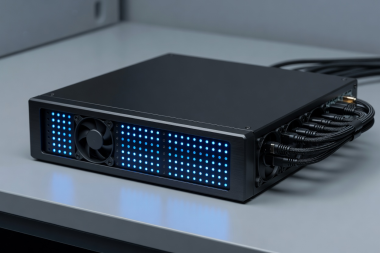
Intelligent edge systems extend far beyond voice. Modern consumer surveillance and smart display hardware deploy vision-based NPUs that execute real-time object classification and pose estimation directly at the camera sensor level.
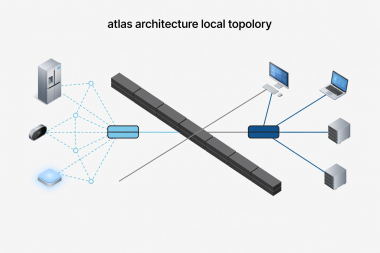
Rather than streaming raw 4K video feeds continuously across home networks, camera modules with onboard inference classify objects—distinguishing between family pets, package couriers, vehicles, and human intruders—directly on frame buffers. Only semantic event metadata ("Delivery courier identified at entrance at 14:32:01") is broadcast to the central automation server. The high-resolution video stream remains stored strictly on encrypted local micro-SD or network-attached NVMe storage, safeguarding household privacy against intercept risks.
The Hybrid Fallback Dilemma: Boundaries of Edge vs Cloud
While edge computing excels at deterministic tasks—such as intent classification, hotword spotting, and biometric facial matching—it cannot fully replicate the vast parameter space of large cloud foundational models. Complex open-ended queries ("Summarise the key points from my calendar and plan an efficient travel itinerary into Manchester") still require extensive multi-billion-parameter cloud models.
Consequently, modern intelligent consumer systems are converging on a hybrid split architecture. High-frequency, deterministic automation commands are strictly handled by local edge inference engines. Unconstrained conversational queries are cryptographically scrubbed of identifiable device telemetry and passed to cloud endpoints only after explicit user confirmation. Navigating this boundary with transparency remains the primary benchmark for consumer trust in 2026.