
Reference Publication 2026

Smart Technology Atlas

An independent editorial guide to connected devices, intelligent systems and emerging consumer technology. Deconstruct protocol fragmentation, evaluate edge computing architectures, and navigate modern consumer ecosystems with technical precision.

Architectural diagram and physical hardware nodes representing interconnected smart ecosystem components

Core Atlas Domains

Five comprehensive editorial treatises mapping the contemporary smart hardware and intelligent processing landscape.

Smart home multiprotocol wireless border router and environmental sensors on a dark slate surface
Domain 01 • Automation & Fabrics

Smart Home Protocols & Local Mesh Topologies

Explore the shift toward zero-cloud automation pipelines, Matter application layers, Thread mesh radio fabrics, and low-latency local execution hubs. We analyse interoperability realities across Apple Home, Home Assistant, Google Home, and Amazon Alexa fabrics.

Matter Standard Thread Routers Zigbee Backhauls Local Fallback
Read Smart Home Treatise →
High performance Wi-Fi 7 mesh node and networked streaming hardware displayed with clean metallic finishes
Domain 02 • Ecosystem Hardware

Connected Devices, Media Pipelines & Networking

From Wi-Fi 7 multi-link operation in home routers to low-power cameras, displays, and synchronised streaming endpoints. Our guide investigates RF band contention, proprietary ecosystem silos, and local network privacy hygiene for connected consumer appliances.

Wi-Fi 7 MLO Bluetooth LE Audio Camera Telemetry Bandwidth Budgeting
Inspect Connected Devices Guide →
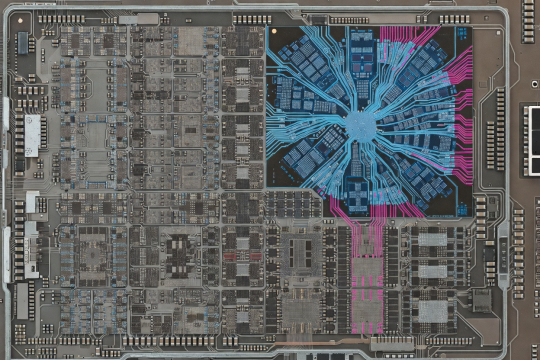
Microprocessor die visualisation highlighting dedicated neural processing unit circuitry and local inference pathways
Domain 03 • Applied Inference

Intelligent Systems, Edge NPUs & Voice Interfaces

A critical assessment of multimodal on-device machine learning versus cloud round-trips. How silicon from Qualcomm and Apple enables computer vision, acoustic event detection, and real-time contextual routines without transmitting audio streams off-premises.

On-Device NPU Multimodal AI Acoustic Classifiers Cloud Fallback Risks
Examine Intelligent Systems Deep-Dive →
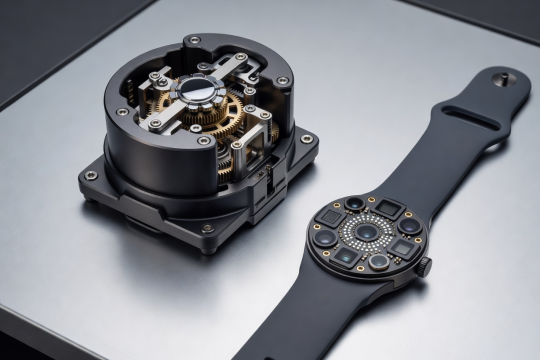
Autonomous robotic vacuum lidar turret assembly juxtaposed against an advanced multispectral smartwatch sensor cluster
Domain 04 • Autonomous Hardware

Wearables & Domestic Robotics Navigation

Biometric sensor arrays, optical photoplethysmography, solid-state lidar mapping, and stereoscopic obstacle avoidance in consumer floor robotics. Understand real-world telemetry trade-offs, spatial cartography data collection, and mechanical battery life realities.

Solid-State Lidar Photoplethysmography SLAM Navigation Smart Glass Optics
Review Wearables & Robotics Report →
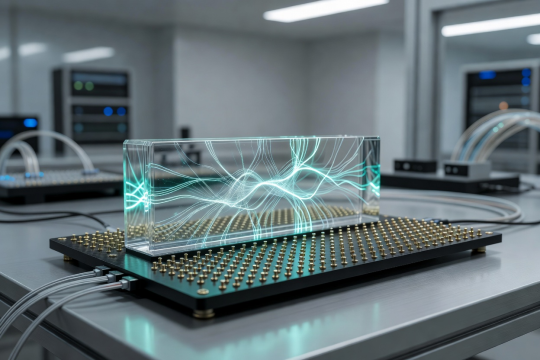
Transparent optical waveguide component and micro-radar array illustrating ambient presence detection systems
Domain 05 • Horizon Architectures

Emerging Technology: Ambient & Spatial Horizons

Sub-terahertz micro-radar gesture tracking, energy-harvesting ambient IoT nodes, spatial computing optics, and zero-standby power standards. Review structural developments that will define consumer interaction models across the next hardware lifecycle.

Micro-Doppler Radar Energy Harvesting Spatial Optoelectronics Zero-Standby Nodes
Explore Emerging Technology Horizon →
Atlas Architectural Principles

Local Execution vs Cloud Dependency Matrix

When designing or auditing smart environments, hardware longevity and operational resilience depend on decoupling the local control loop from external cloud backhauls. Connected devices with purely cloud-mediated APIs carry inherent obsolescence liabilities, unpredictable latency spikes, and recurring subscription barriers.

1. Local Fallback Guarantees

Relays, switches, and critical security sensors must function mechanically and locally over Thread or Zigbee without active wide-area network routing.

2. Protocol Agnosticism

Devices operating Matter over Thread or standard IP allow multi-admin control, mitigating catastrophic ecosystem lock-in when platform vendors alter terms.

3. Edge Telemetry Containment

Computer vision cameras and biometric trackers must process raw sensor tensors directly on dedicated NPUs, discarding raw audiovisual payloads immediately.