The Infrastructure Bottleneck: Multi-Band Routing & Wi-Fi 7
The average connected residence now maintains dozens of active radio clients, ranging from smart televisions, gaming consoles, and network-attached storage appliances to smart washing machines and IP surveillance feeds. Historically, this density triggered extreme network degradation as legacy 802.11ac (Wi-Fi 5) access points struggled under airtime unfairness and single-channel queue saturation.
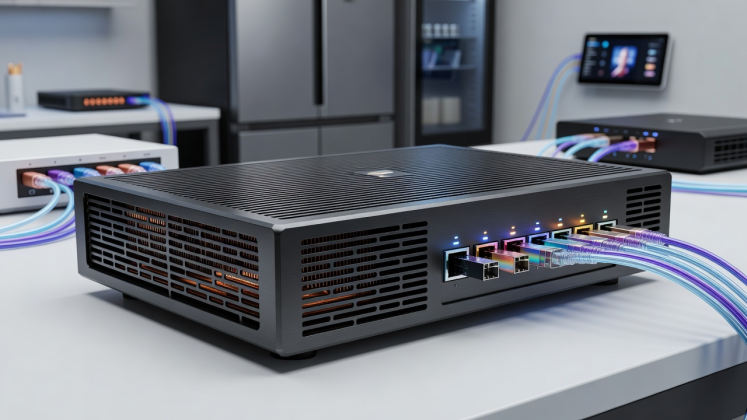
The deployment of Wi-Fi 7 (802.11be) introduces structural protocol innovations tailored directly to heterogeneous smart environments. The most impactful advancement is Multi-Link Operation (MLO). Unlike previous standards where a client device was pinned strictly to either the 2.4 GHz, 5 GHz, or 6 GHz frequency band, MLO allows compliant hardware to aggregate multiple bands concurrently. High-priority video streams or interactive low-latency commands can transmit simultaneously across 5 GHz and 6 GHz spectrum channels, dropping connection latency below 5 milliseconds and eliminating buffering even within congested residential airspaces.
Media Distribution: Audio Transport and Ecosystem Silos
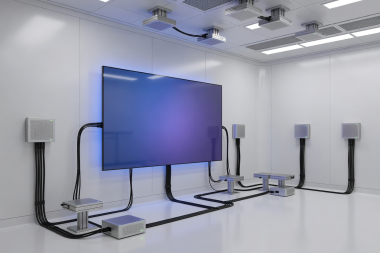
Networked audio illustrates the tension between open industry standards and proprietary ecosystem capture. High-resolution multi-room audio transmission requires microsecond-level synchronization across independent endpoints to prevent acoustic phasing.
Proprietary protocols such as Apple AirPlay 2, Google Cast, and Sonos Net deploy proprietary Network Time Protocol (NTP) variations to achieve synchronous audio playback over Wi-Fi. While user-friendly within uniform hardware stacks, these protocols severely restrict interoperability. Attempting to synchronize an AirPlay 2 soundbar with a Cast-enabled wireless speaker in an adjacent room remains fundamentally incompatible at the transport layer.
Concurrently, Bluetooth LE Audio and the LC3 (Low Complexity Communication Codec) are revolutionising personal media distribution. Unlike legacy Bluetooth Classic streaming using the A2DP profile, LE Audio supports multi-stream audio and Auracast broadcast capabilities. An individual display or public transmitter can stream multiple independent audio tracks simultaneously to an unlimited number of nearby receiving headphones or hearing devices, establishing an entirely open alternative for synchronized listening.
Surveillance Telemetry: Cloud Streaming vs On-Premise NVR
Smart security cameras and visual doorbells represent the highest sustained bandwidth and privacy risk within consumer technology. Commodity cloud-based cameras continuously push H.264 or H.265 encoded streams to external storage nodes, consuming continuous upstream internet bandwidth and subjecting private domestic footage to provider retention policies.
In response, technical adopters are migrating toward RTSP (Real-Time Streaming Protocol) and ONVIF-compliant IP cameras integrated with local Network Video Recorders (NVR) and self-hosted inference engines such as Frigate or Scrypted. By utilizing edge object detection accelerators, video feeds are analysed directly within the home perimeter. Footage is recorded solely to local RAID storage, and notifications are generated locally without transmitting a single video frame over the public internet.
Network Segmentation Hygiene: VLANs and Firewall Rules
Connecting low-cost smart appliances—such as robotic vacuums, smart ovens, and smart power strips—to the identical subnet as personal computers, smartphones, and financial storage devices creates substantial security exposure. Budget IoT firmware rarely receives sustained long-term security patching, making devices vulnerable to port scanning and automated botnet commandeering.
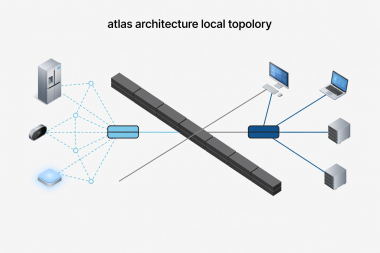
A robust residential network architecture mandates Virtual Local Area Network (VLAN) segregation. By establishing an isolated "IoT VLAN" on a managed switch or prosumer router (running pfSense, OPNsense, or UniFi Network), administrators restrict smart devices to basic local multicast DNS discovery while blocking inter-VLAN access to primary computing nodes. Firewall rules prevent untrusted devices from initiating outbound connections, allowing only established and related traffic flows.